• RSS
  • Delicious
  • Digg
  • Facebook
  • Twitter
  • Linkedin
  • Green Idea 1 : ' Find your nearest Farmer's Market and go there this weekend with friends...
  • Green Idea 2 : ' Swap your old incandescent bulbs for CFLs when they burn out and start saving $$$
  • Green Idea 3 : ' Try using your bike this weekend instead of your car...
  • Green Idea 4 : ' This Spring why not plant a small kitchen garden of tomatoes and peppers on your balcony or patio?
  • Green Idea 5 : ' What are you waiting for? Make the change today!
  • SUSTAINABLE DESIGN

    The basic objectives of sustainability are to reduce consumption of non-renewable resources, minimize waste, and create healthy, productive environments.

  • URBAN GARDENING

    You can grow your own food whether you live on a rural farm or in a tiny urban apartment. Urban gardening is all about using space wisely to regain a closer connection with your food and beautify your home or neighborhood.

  • RENEWABLE ENERGY

    Explore energy resources, such as wind, solar, hydroelectric, biomass, geothermal, ocean thermal, and wave power, that replenish themselves within a short period.

  • LOCAL FARMERS MARKETS

    Locating the Farmers' Market nearest to you is now only a few clicks away. Localharvest.org is a useful and straight-forward site designed to faciliate your quest.

Showing posts with label Urban Gardening. Show all posts

Sunday

Review: "Plan Bee", by Susan Brackney.

Posted by vergelimbo On 10:31 AM

"Now disappearing in alarming numbers, honeybees are the unsung heroes of the food chain, essential for the pollination of apples, oranges, almonds, blueberries, and more than ninety other crops."
Find more info@ planbeebook.com

One of the long-term projects I have had on my "to do" list for the Urban Garden Project over the last few years has been to keep a few hives of bees. My friend Steve G, also an aspiring beekeeper, has been a member of the Forsyth Beekeepers' Association for some time and has encouraged me in this direction. Beekeeping has always appealed to me, and thousands of determined pollinators would benefit my garden's yield dramatically. Oh yeah...and there is the honey. Local honey, apart from tasting yummy, offers immunity to many seasonal allergy symptoms. However, my design/build work [ie: my real job] has taken off, leaving me no time to pursue my own "Plan Bee" this season. Nonetheless, I have (bee)n able to research many of the practical issues of beekeeping and that is how I came across Susan Brackney's "Plan Bee". Aptly subtitled "Everything you ever wanted to know about the hardest working creatures on the planet", Plan Bee is destined to become a cult classic.

My friend Andrea had just finished reading "Plan Bee" and was intending to sell it to a local used-book store when I stepped in. The moment I saw the dust cover and skimmed through its 192 pages I was "stung" with interest. As a designer, I very much appreciate the concept and layout of the book itself... someone with a skilled eye and subtle creativity has done very good work - from the cover art to the binding, the paper used, the fonts chosen, the page layout, the varied photographs and sketches within, through to the back-cover blurbs.

Brackney divides the book into two parts: "The Buzz about Bees" and "A Beekeeper's Life", for a total of 9 chapters with multiple sections therein. Chapter titles include such puns as: "Who's Who in the Hive", "The Bee's Knees" and "The Sweet Life". Humorous anecdotes abound. But so too does a wealth of interesting scientific, cultural, historical, environmental and practical information. This is not a textbook on beekeeping... but it will stimulate the enthusiast into pursuing more reading about bees and beekeeping, or at the very least (for the casual reader) it will draw attention to the largely unrecognized importance of bees in our world. Multiple footnotes anchor the pages - some anecdotal, some academic, but all interesting, useful and often funny. Two pages of "Further Reading and Resources" finish the book.

The writing is colloquial, accessible, concise and very entertaining. It is really quite a feat that Plan Bee contains such a range information: from beekeeping rituals in ancient Egypt to the early American beekeeping practices, to the current blight of the Varroa mite and up-to-date research on the looming and mysterious threat of Colony Collapse Disorder [CCD]. This book is one of the better "How To" books I have ever read... what it lacks in practical matters it more than makes up for in its inspiring tone, clear message and provocative futurism. Anyone could read "Plan Bee" and everyone will enjoy it. I already have 3 friends looking forward to borrowing my copy. I am hoping that they will give into their stinging desires to read "Plan Bee" and buy their own copies. An author this good deserves to be rewarded. I'll be buying another copy to give to a friend for his birthday.

Wednesday

Fall Slideshow: Urban Garden Project

Posted by vergelimbo On 6:30 PM


2009 was The Year of Rain at The Urban Garden Project. Whereas last year I needed to water the garden to stave off the flaccid, victorian death scenes my plants staged for me on a daily basis, in 2009, my garden was upright, lush and green - with little or no watering. Ironically, Tim and I began work on a rain collection system, with drip hoses and twin 40 gallon tanks. The rain catcher system is currently sitting in parts in the corner of my shop. I have just finished another big design/build project for Dewey's Bakery and Cafe, so I might have some free time to piece my rain catcher together so that it is up and "catching" for Spring.

The Fall/Winter plants are in, and the peppers, eggplant, and mixed lettuce are still going strong. It is November 4th, and 60 degrees. I am about to harvest some Bok Choy and Peppers, so I went looking for a Bok Choy soup recipe and found this:

BOK CHOY IN COCONUT MILK
Prep time: 10 min | Cooking time: 15 min | Serves: 2

1 big bunch bok choy, leaves and stems roughly chopped
1 small onion, sliced
1 tsp garlic, minced
1 tbsp Sambal Olek/red chilli paste
2 cups coconut milk
salt, to taste

ADD onions, bok choy stems, garlic and chilli paste to coconut milk in a deep pan, and let it come to a boil over medium-heat. Stir ocassionally to allow garlic and chilli paste to blend well with the coconut milk.

ADD bok choy leaves, season with salt, and turn off the heat. Cover the pan and let it sit for a few minutes till the leaves begin to wilt.

Recipe Hookup: hookedonheat.com


This simple soup looks so delicious! Do you have any favorite soup recipes to share? Leave me a comment or recipe by clicking on comments below:

Thursday

Urban Garden Project: September 16th Slideshow

Posted by vergelimbo On 9:57 PM


Phew! Last Friday I finished my big design/build project for Dewey's Cafe and Bakery, and they will be opening to the hungry public Monday. The long hours and working on the weekends is over - for the moment. I have taken a small "breather" and am focused on planting the fall crops in my Urban Garden Project.

For the last four years, I have been fine-tuning the principles of organic SPIN gardening [Small Plot INtensive] in my expanding garden. Recently, I rotated some crops out, leaving the still-producing peppers, tomatoes, eggplant, beans, broccoli, melons, and okra in place, while inter-planting fall vegetables in the gaps. Spin gardening is specially conceived to maximize the production and variety of seasonal crops to ensure year round production of the gardener's favorite-or most valuable produce. My garden is roughly 1500 square feet divided into 10 raised beds, and produces more than sufficient vegetables and fruit for me and my friends. I sell any surplus at the local farmers' markets. Lately there has been a lot of surplus...

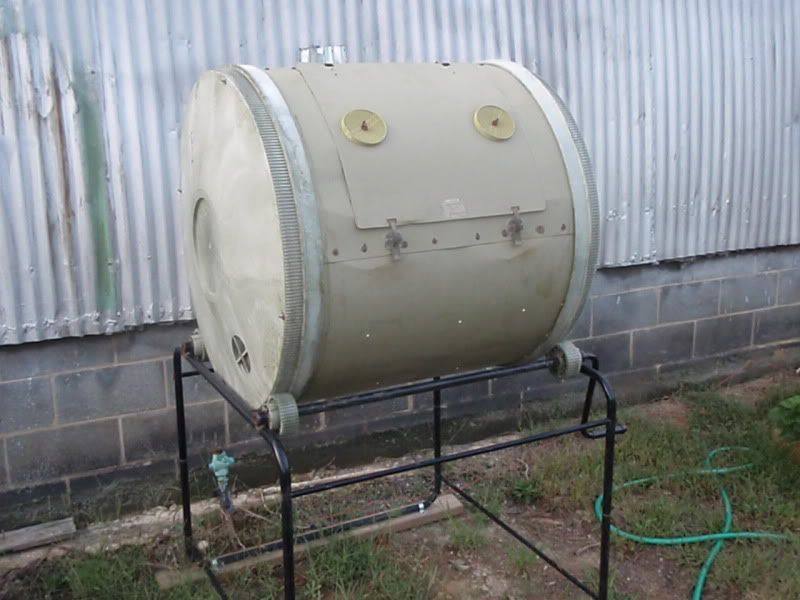
Yesterday I began planting my fall crop which includes: kholrabi, collards, broccoli, onions, beets, kale, squash, carrots, sugar snap peas, spinach, mesclun mix, radishes, chard and garlic. My huge and insatiable composter has devoured the plants I pulled up, as well as the regular "feedings" provided by a network of friends who contribute their compostable material on a regular basis.

Organic composting is an essential element of my spin gardening technique. Continually amending the soil with fresh compost and organic fertilizers such as Plant Tone, Black Kow and organic mushroon compost ensures a healthy, nutrient-rich medium for my plants to grow.

What are you planting? Let me know below:

Friday

Spingardens.com at The Urban Garden Project

Posted by vergelimbo On 11:28 PM

So, what is SPIN Gardening?

Small Plot Intensive Gardening is an innovative organic gardening technique designed to promote "small-plot farming" in urban areas by maximizing the yield and variety of seasonal fruits and vegetables. Spin gardeners can consume the fresh seasonal organic produce that they grow, or offer their goods for sale at the nearest Farmers' Market. (Find the nearest location here)


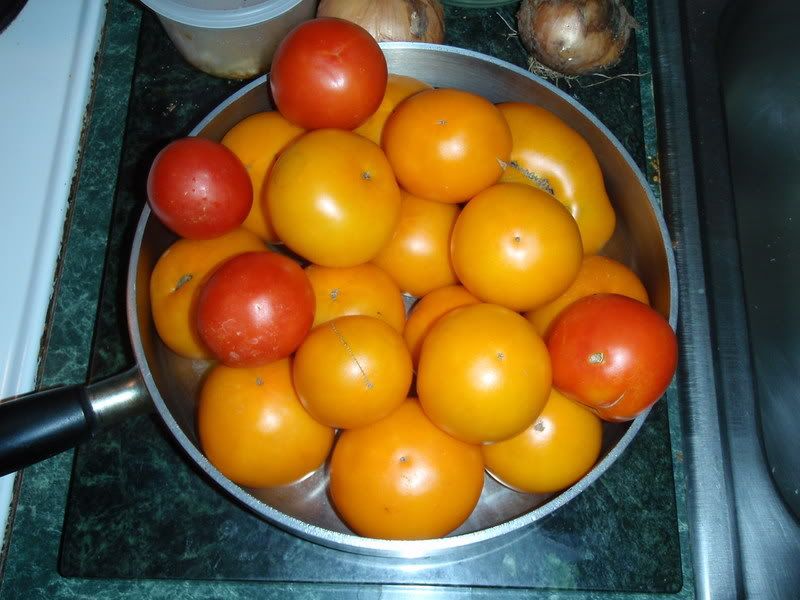
THE UNUSUAL SUSPECTS: Blue Beach Paste, Haley's Pink, Lemon Boy, Mr. Stripey, Cherokee Purple and Golden Girl tomatoes which I sold at a local Farmers' Market today

I have been SPIN gardening for the past 4 years at my Urban Garden Project. I "repurposed" roughly 1500 square feet of an abandoned side-lot adjoining my woodworking shop in Winston-Salem, NC. Divided into 10 raised beds, I grow 7 varieties of heirloom tomatoes, eggplant, 4 types of peppers, beans, zucchini, corn, cucumber, cantaloupe, watermelon, figs, kiwi, blackberries, raspberries, okra, chard, carrots, radish, beets, onions, garlic, salad, kale, sunflowers, basil, cilantro, mint, fennel, rosemary, rhubarb, parsley and a variety of flowering medicinal plants.

FOR MORE INFO LEAVE A COMMENT OR CHECK BACK SOON!

Urban Garden Project Recipe: True Peasant Pesto

Posted by vergelimbo On 9:56 PM

Roughly, To Taste and Texture, Combine:

Basil Leaves - 8 cups of leaves

Olive Oil - 1 half cup
Pine Nuts- 1 half cup
Garlic - 1 full bulb
Parmesan - 1 cup
Mint - 8 sprigs [leaves only]
Parsley - 4 sprigs
Anchovies - 1 small can
Nutmeg - 3 pinches
Balsamic Vinegar 2 Tbsps
Salt and Pepper

In a food processor, combine Olive Oil, Pine Nuts, Garlic, Anchovies
PULSE until coarsely chopped.
Gradually add Basil, Parsley, Mint until mixed [do not puree]
Add Parmesan, Nutmeg, Mint, Salt and Pepper

This once-secret recipe for "Urban Peasant Pesto" was passed to me by two men named John. The pesto is worth it's weight in gold. To make the 5.75 pounds of pesto pictured above I picked a well stuffed grocery bag of basil leaves from my Urban Garden Project. They have since grown back and I am almost ready to pick again. [See Photo]

Walnut Variation: Lately the price of Pinenuts (pignolias) has gone through the roof... Walnuts are a tastey and more affordable alternative. I actually prefer the "Walnut Variation". Also in lieu of olive oil try using walnut oil. Your palate will be pleasantly surprised, and your wallet will suffer less.

Share your favorite Garden Recipe or comment by clicking below

Thursday

Urban Garden Project: July Update

Posted by vergelimbo On 8:11 PM


I took these photos of my Urban Garden project July 15th, 2009. This is the fourth season of the garden, and every year it grows bigger and better. I "repurposed" the lot adjoining my shop with the intention of beautifying the space, promoting urban gardening and ensuring a steady supply of delicious fresh fruit and veggies for me and my friends... "Mission Accomplished"


For Further Information: To Learn the Who, How, Why and Where about The Urban Garden Project check out these articles:

Locavores, Patio Gardens and Urban Gardening
Urban Gardening and the Habits of Locavores
Urban Garden Project: Winston-Salem, NC
Urban Garden Project: Composting in the City
Recession Gardening and the Micro CSA Project

In the beginning: After days of weeding, levelling and removing the gravel of the former driveway June 2006

Friday

Victory Garden Posters

Posted by vergelimbo On 10:39 PM

I love these World War II era Victory Gardens posters.

They represent the ideal convergence of patriotism and artistry. The Work Progress Administration (WPA) hired artists to design these posters to help promote self-sufficiency and co-operative ideals on the home front as a part of the war effort.

Victory Gardens "cropped up" all over the country. At their peak, it is estimated that almost 20,000,000 gardens were growing, and that about 40 percent of all vegetables produced in the U.S. came from Victory Gardens. By the end of the Second World War, the Department of Agriculture estimated total home front production of over one million tons of vegetables valued at 85 million dollars.

Which is your favorite poster? Tell me why below:

Urban Garden Project: June Update

Posted by vergelimbo On 2:20 PM


I should use "stop-action" photography to capture the insane growth occurring at my Urban Garden Project. I took these pics a week ago, and things have grown so much since. "How can this be possible?", you may ask. The simple answer is rain, then lots of sun, and love throughout (ie: weeding, trimming, staking, etc.)

Here are some close-ups of the veggies I have picked recently:


This week I will be training the watermelons down the driveway, mulching most of the garden with straw, and picking some tomatoes, onions, beans, blackberries, salad, and peppers.

Leave me a comment or question and I will get back to you!

Recession Gardening and The Micro CSA Project

Posted by vergelimbo On 5:36 PM

There's money in them there vegetables!

Spring is right around the corner, and many a gardener's green thumb is twitching. I spent a sunny Saturday turning over one of my larger raised beds and uprooting last seasons spindley leafless tomato and pepper plants. I am always careful to shake the heavy-laden roots and capture as much of the soil as possible. The old saw: Waste not, want not fits gardening like glove.

Urban Garden Project Year 3: Oct 2008
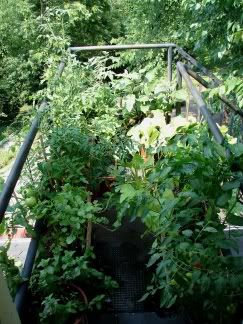
When I started The Urban Garden Project 4 years ago, it was only in part for the financial benefit of growing my own favorite veggies. For the most part it was an expression of potential- to transform an unused piece of urban land into something useful and beautiful. It was also sort of a habit...gardening was just something that I did. My first summer job was building a new community garden near where I grew up. This process lasted over 4 summers from the age of 13-17. When it was completed it occupied 2 acres and 116 raised garden beds. Along the way I learned how to build a fence, lay patio stone walkways, build a deck and finally graduated to building a gazebo for the gardeners to enjoy. I have started my own garden in every place I have lived ever since then. Sometimes I was restricted to a mere fire-escape garden, but it is surprising how much a container garden can yield. Tomatoes and Peppers thrive in containers.

John's Garden is a recession-proof model of sustainabilty.

Since we are now in an economic recession (proving: you reap what you sow) more people have begun planting their own "kitchen gardens" and cutting down on their trips to Whole Paycheck. I was speaking to an old friend the other day who is anxious to start such a homestead garden. We discussed starting a network of small home gardeners that could share/swap/trade their individual yields. I already do this to a small degree with my gardener friends but look forward to the possibility of helping to expand this idea with some other interested parties. (Find more ideas on garden swaps and Micro-CSA see articles here and here)

If you are interested in the idea of starting a local network of organic gardeners leave me a comment below. I will follow up with an email in a few weeks time as the season is upon us. We can meet to compare notes and swap seeds, plans, ideas etc.


Tuesday

Urban Garden Project: Composting in the City

Posted by vergelimbo On 6:25 PM

This year I had one tomato plant that yielded 52 baseball-sized tomatoes. That may sound unbelievable, but look. When I began the Urban Garden Project 3 years ago, my goal was simple: transform a patch of neglected and fallow urban land into a high-yielding garden. I chose to plant my favorite things, and also the most expensive vegetables: Organic Tomatoes, Bell Peppers, Eggplant, Tomatillos, Arugula, Beets and Melons will all put a small dent in your wallet if you buy them from your local farmer's market. If you opt to buy these vegetables at "Whole Paycheck" , you may need to consider refinancing your home.

With the economics of urban gardening in mind, I have tried to maximize the square footage yield of my garden. The highest yields per square foot include Arugula, Basil, Red Peppers and Heirloom Tomatoes. From year to year I have been fine-tuning the balance of vegetables, berries and fruit, and ever improving the quality of the soil. It is an ongoing project that saves me thousands of dollars a year, consumes a minor amount of time, and has absorbed a major amount of compost.

Compost is any organic matter allowed to biodegrade and then later added to your garden to enhance the soil's nutrients, micro-organisms and texture. Neighbors and friends have steadily contributed organic kitchen scraps, cuttings, and rotting veggie produce. The results have literally born fruit - and lots of it.

Alex and Steve: Compost Contributers to The Urban Garden

For the collection of compostible materials from neighbors and friends, I use your standard 5 gallon bucket [above] You can simply keep this in the kitchen and "feed" it kitchen scraps, much like a waste bin- but rather than being added to the mountainous accumulation of garbage we generate, it can be aggregated in a large compost pile (as I do) and later added to garden beds.

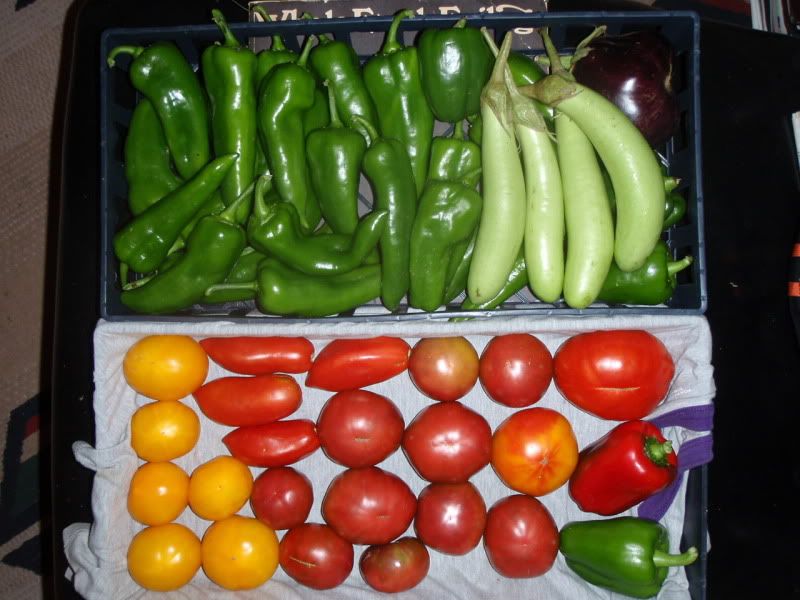
"Give and ye shall receive" is my motto when it comes to the vegetables and berries that come from the garden. Roughly 1500 square feet divided into 8 raised beds and thoughtfully planted yields far more than I can eat, so I have been supplying my hungry green friends with free vegetables like this:

Urban Garden "Horn Of Plenty" July 27, 2008

I stumbled across the Giving Garden idea when I received a delicious marinara sauce from my neighbors Steve and Alex. A few weeks earlier I had let them pick a bucket full of fresh veggies [see above] and low and behold in return I received 5 pounds of sauce which upon tasting, in a Proustian manner, I now refer to as "the marinara of my childhood".

The Marinara Sauce of Childhood

Shortly thereafter, my friend Zeke told me that if I gave her enough Blackberries I could get a delicious cobbler in return. Sadly, this cobbler was so good that I ate it all before I could take any photos! Hearing of my garden's generous bounty, Cameron "borrowed" some Golden Girl yellow tomatoes, and returned a
delicious smoky yellow tomato soup....and so on and so on...

Cameron's Roasted Chipotle Yellow Tomato Soup

Is there anything better than eating crisp vegetables, freshly made soups, sauces, gazpacho, pesto, chutneys, ratatouille, and berry cobblers? Perhaps, but only if you took the time and care to grow the ingredients yourself, and had the dishes prepared by talented friends. Thanks to everyone who helped promote and share in the idea of a Giving Garden.

Sunday

Organic Garden Project: Winston-Salem, NC

Posted by vergelimbo On 7:45 PM

A slideshow update of The Urban Garden Project is overdue!


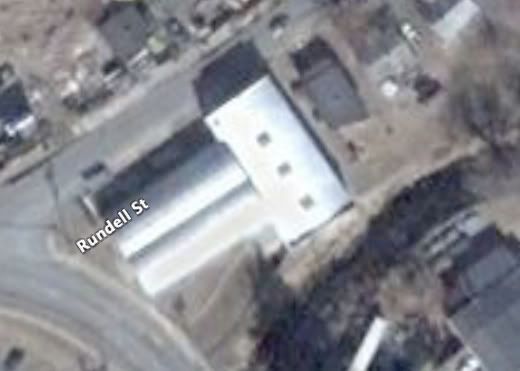
In May of 2006 I decided to transform a former urban industrial site into an organic garden. The idea to convert the 1500 square foot side lot of an industrial building into a viable organic garden came to me through my involvement in The Hut Collective. For the past 7 years, my design and woodworking shop has been located in a 1950's Quanset Hut occupied by a small group of artists and craftsmen. [photo] In June I decided to direct my greener ambitions towards recouping and transforming some of the unused lot into a productive organic garden. The owner of the property was very encouraging and offered not only to help me, but gave me the salvaged wood I used to build the fence.


Those curious about the gradual transformation of this formerly abandoned industrial sidelot into a high-yielding organic garden click here.

Upcoming projects include establishing a local network of Urban Gardeners and pooling our skills, experience and vegetables. If we can involve enough homestead gardeners it might become possible to start an micro-CSA, and offer an even wider variety of veggies to members of the community. To some degree this is already underway between my other gardener friends. I was recently given 3 Kiwi vines by my friend John who has been growing Isaac Kiwis her in NC for almost 20 years. We also swap surplus veggies and tastey soup. Next year I hope to make this into a more formal structure with new members.

Wednesday

Urban Gardening Project: Winston-Salem, NC.

Posted by vergelimbo On 2:03 AM


I took these photos on July 10th. Recently we have been having a ridiculous amount of rain here in Winston-Salem, NC. Combined with temps in the 80's and 90's my Urban Garden Project has really taken off. I suspect that shortly I will be living exclusively on a diet of Gazpacho - fortunately I happen love the stuff.

Click Here for History of The Urban Garden Project

Leave a comment or Gazpacho recipe below!

Sunday

Urban Gardening and the Habits of Locavores

Posted by vergelimbo On 4:20 PM

U.S.U.R.P. Garden: Winston-Salem, NC


Usurp \U*surp"\, v.i.

[1] To commit forcible seizure of place, power, or function.

[2] Acronym: Urban Space Utility Repurposing Project.
_______________________________________________________

OK... So I made up the second definition to suit my purpose, and give my garden a cool sounding name. Also, the owner of the property, which is home to The Hut Collective, not only encouraged me to develop the space, he helped with the digging!


Last July I blogged about my Urban Garden in an article called "Locavores, Patio Gardens and Recapturing Urban Garden Space" It seems I am not the only one who thinks paying 4$ per red pepper, or 8$/lb for decent tomatoes is outrageous. Plus, nothing tastes better than a freshly picked tomato, a still-muddy crisp carrot or a fresh-picked salad.
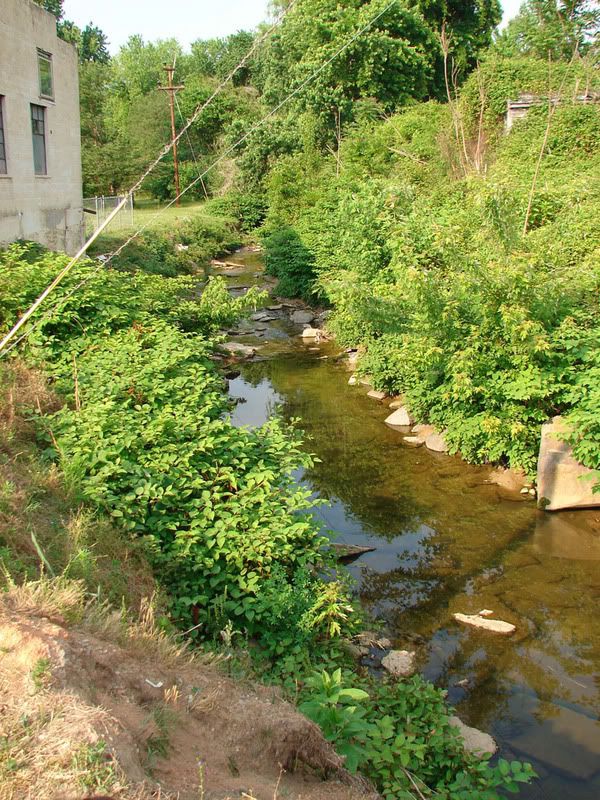
Although for years I have been an avid fire-escape gardener, I decided to establish a more substantial garden in the triangular lot adjacent to the building where my woodworking shop is located. [aerial photo] The area I had chosen for "re-purposing" had previously been a gravel driveway, so the ground was hard-compacted and covered in gravel. A friend with a tractor skimmed the surface roughly to level and used the gravelly earth he removed to re-enforce the banks of the nearby creek.

In the first stages of re-purposing, it looked like this:


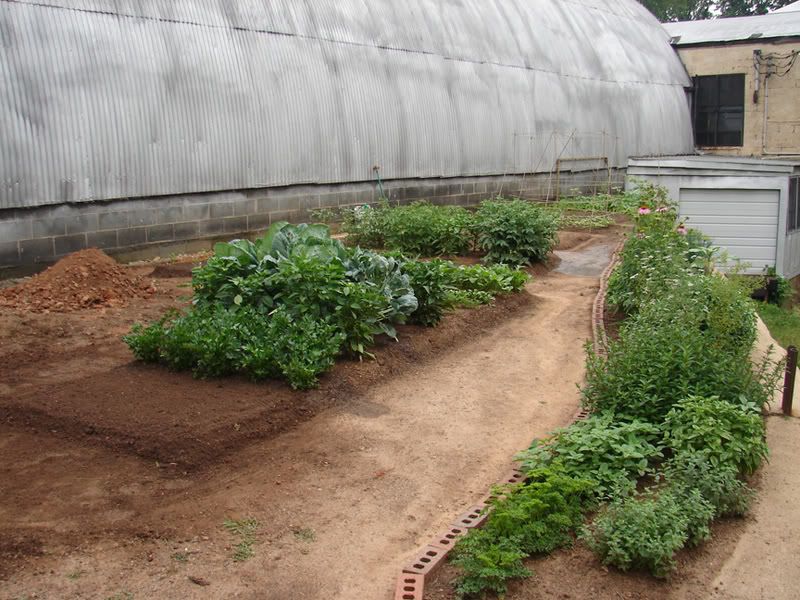
After dozens of yards of dark topsoil, mulch, compost and sweat, it was transformed into this:

Raised beds are the key...spare bricks border the herb bed

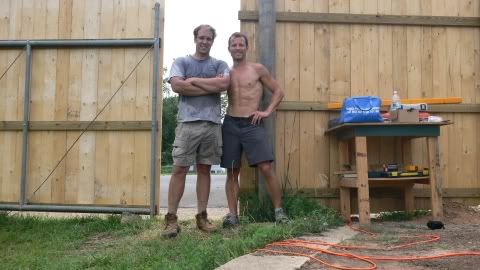
The USURP Garden now consists of 8 raised beds in an area of roughly 1500 square feet. The raised beds have proven to be very helpful in avoiding the deluge of rain run-off from the roof of the quonset hut. Last summer I built a 70-foot fence out of reclaimed shipping crates with the help of a few friends. The fence now encloses the garden and creek area from curious and peckish bipedal marauders. Currently I am seeding a small "green space" for a barbecue/picnic area for small gatherings of friends.

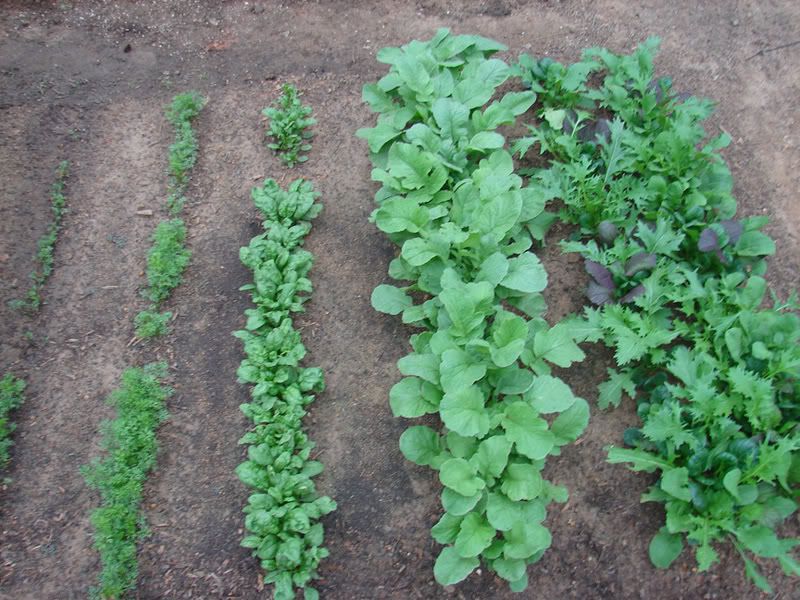
Carrots----------Spinach--------Radish--------Mesclun Mix

On Preparing New Beds:

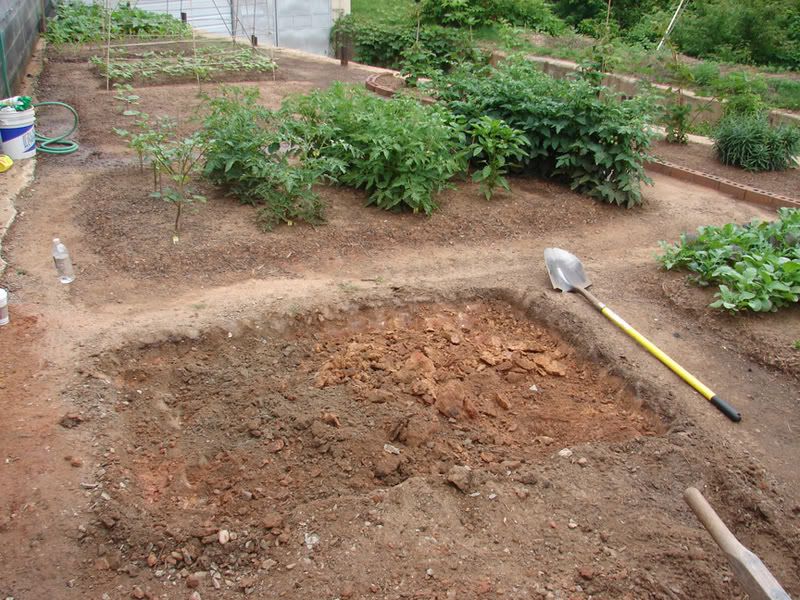
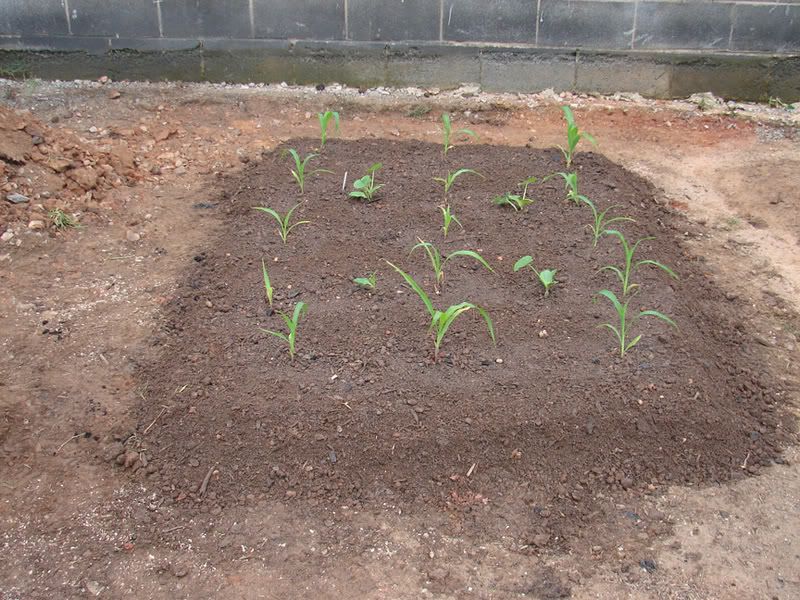
I really like Zucchini grilled on the Barbecue, so today I decided that I needed to find space for my seedling Zucchinis to be planted and also somewhere to transplant some sweet corn. That required digging a new bed. No small feat when clay and rock are your natural soil conditions. Fortunately over the past year I had maintained a topsoil/compost pile for this very reason. Kitchen scraps from my house, and friends houses were added throughout the winter and it had reached that impressive dark rich soil texture in which the Zukes will thrive. But first I had to dig out the hardpacked clay and rock. It looked like this:

Carolina Red Clay and Rock... A#!@$^ing nightmare

I dug down about 10 inches then added a wheelbarrow of Red Cedar shavings that my shopmate Jacob had donated. The new bed measures about 5'x8'. Then I added about 12-14 inches of the rich compost/soil I had on hand and "Voila!"

Sweet Corn and Zucchini Growing Together

Currently Growing:

Herb/Medicinal Bed: Mint, Basil, Cilantro, Dill, Tarragon, Parsley, Rosemary, Sage, Lavender/Echinichea, Lemon Balm, St. John's Wort, Sunflowers, Raspberries and Blackberries.
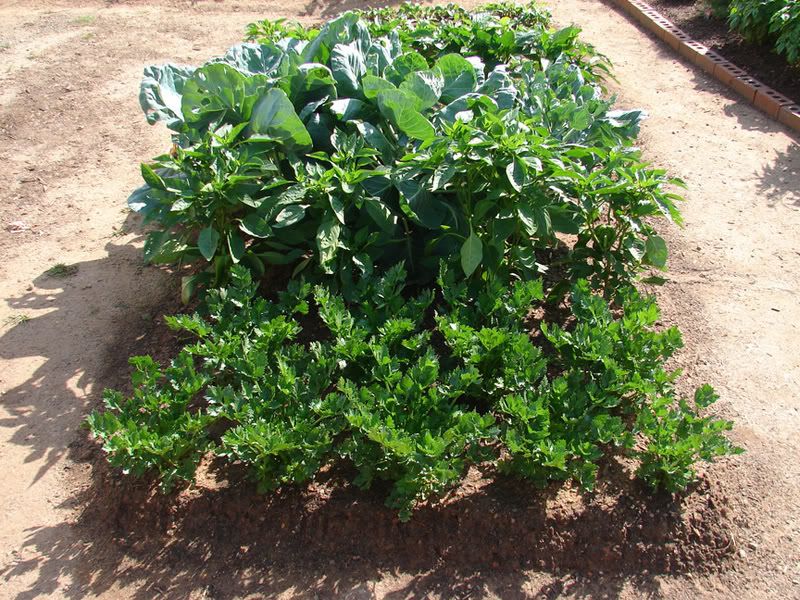
Bed 1: Celery, Red Peppers, Brussels Sprouts, Orange Peppers, Carrots, Spinach, Radishes, Mesclun Salad Mix
Bed 2: Bush Cherry Tomatoes,
Poblano Peppers, Roma, Brandywine, and Yellow Tomatoes, Tamatillos, Okra
Bed 3: Beets, Romaine Lettuce, Spring Onions, Cowhorn Peppers, Leeks, Eggplant
Bed 4: [
Trellised] 4 String Bean varieties, Sugar Snap Peas, Snow Peas
Bed 5: Sweet Corn, Pole beans
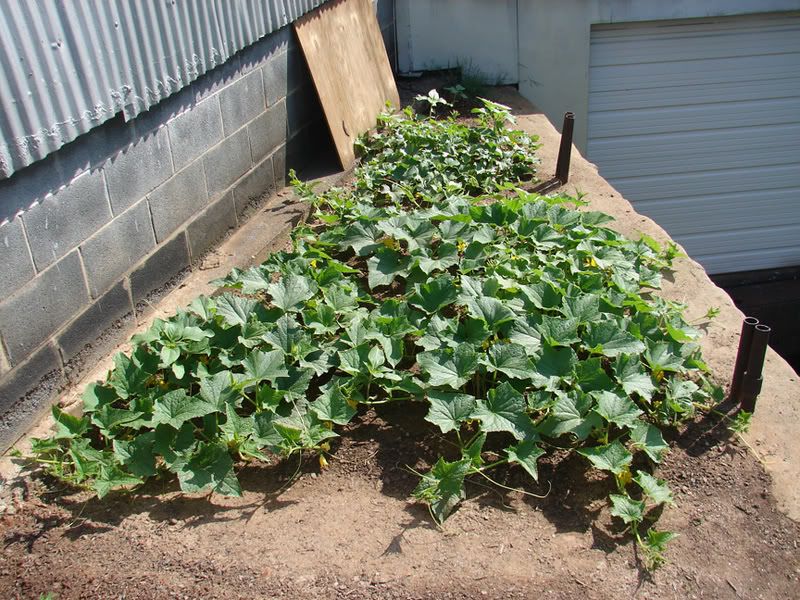
Bed 6: Cucumbers and
Cantaloupe
Bed 7:
Zucchini, Sweet Corn

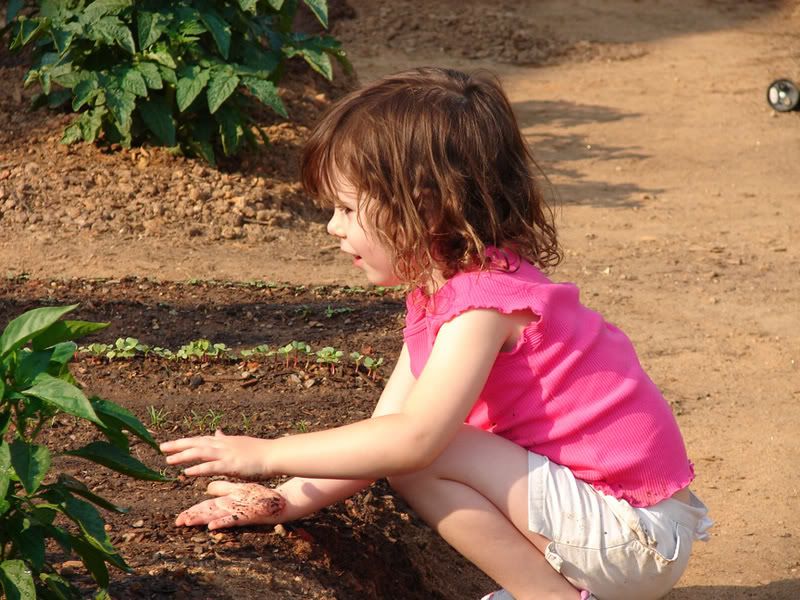
I get a "little" help from some of my friends...
Grow Off Photos:

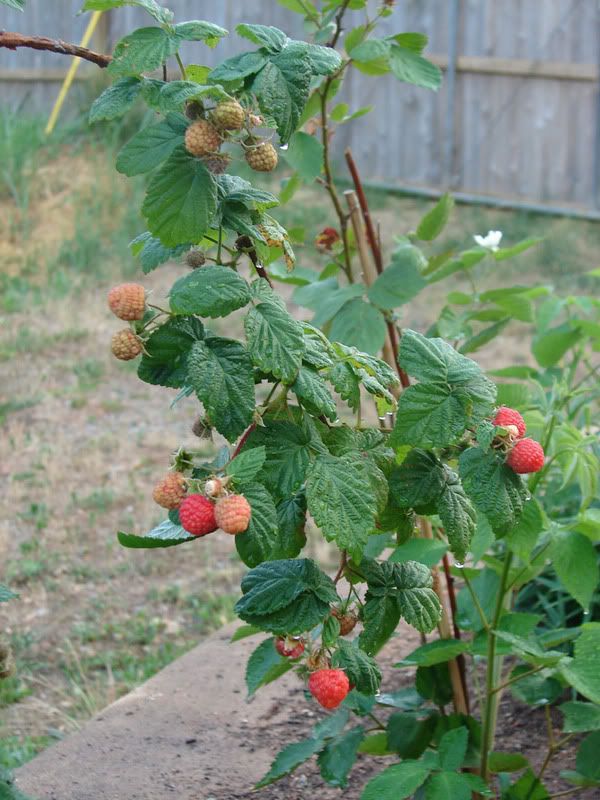
Growing Raspberries
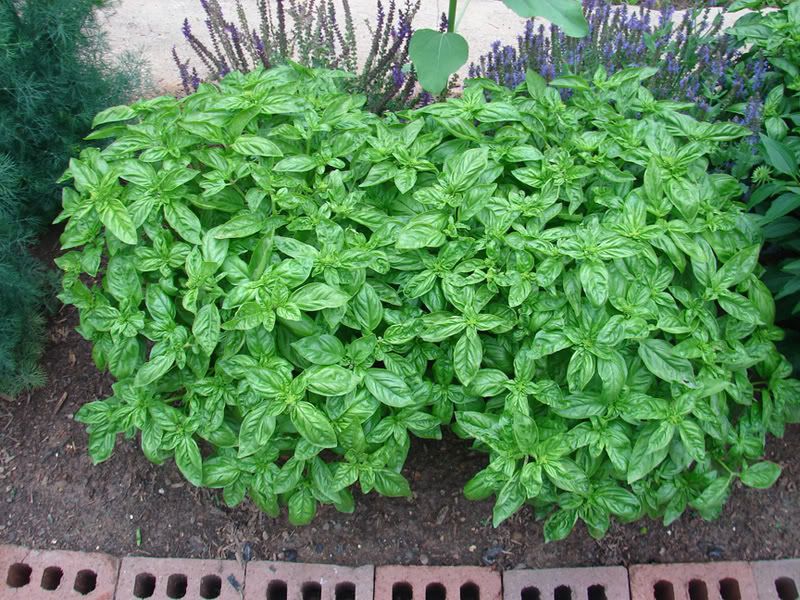
Growing Basil
Cucumber Explosion
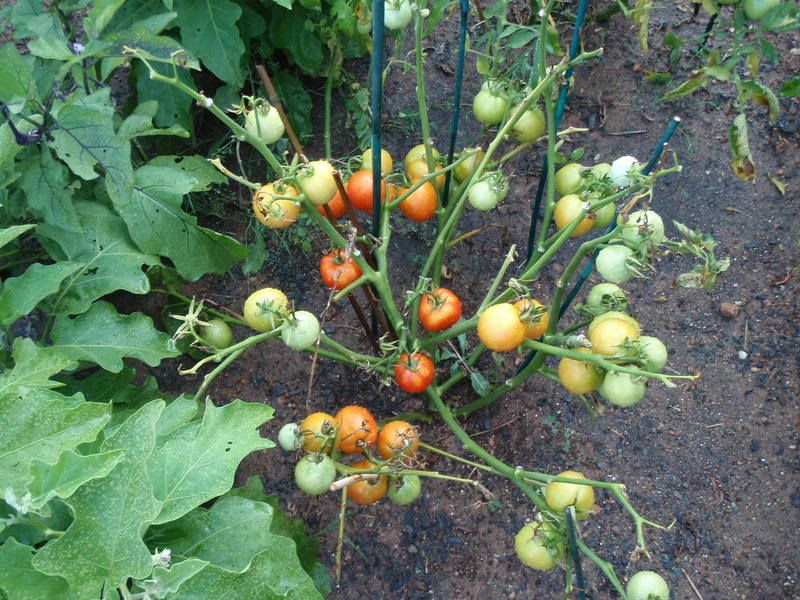
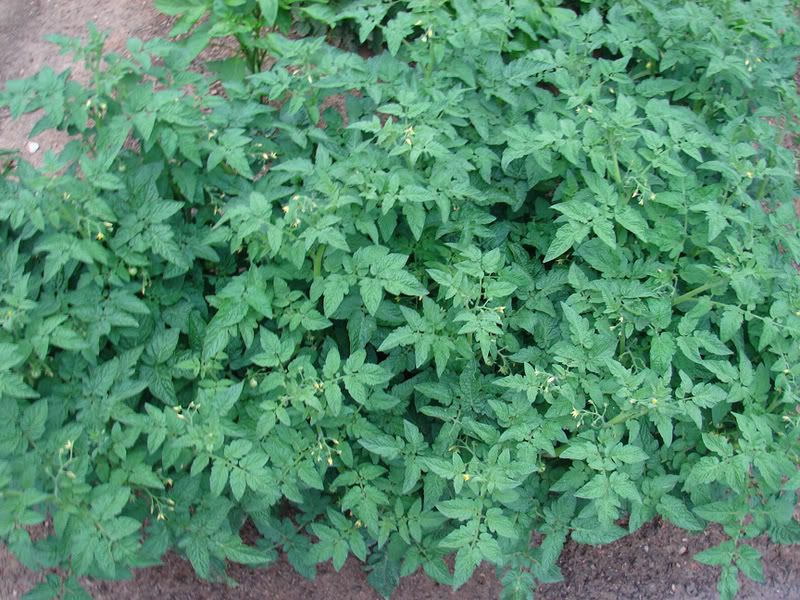
Bush Cherry Tomatoes
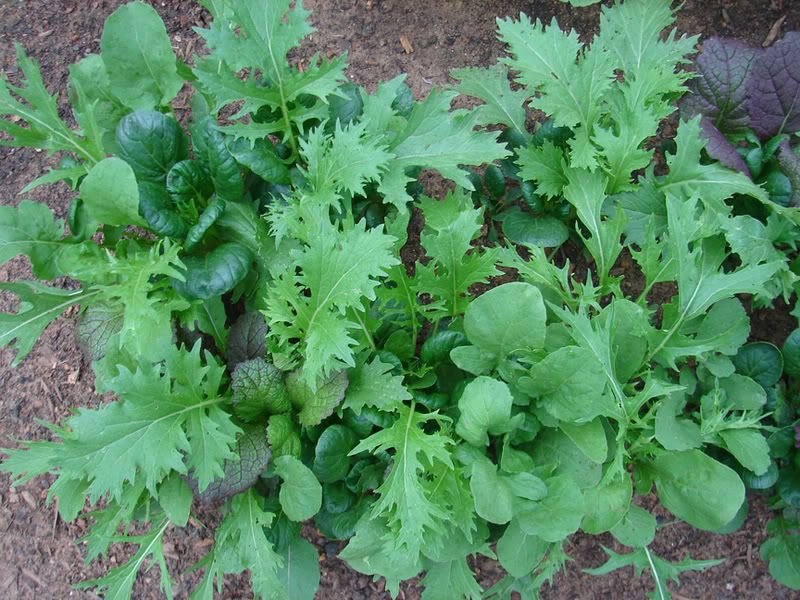
Mesclun Salad Mix
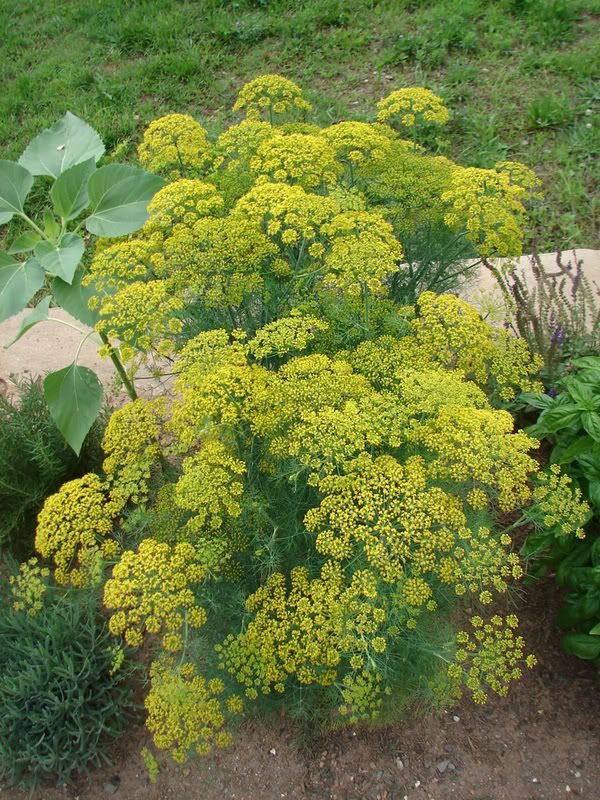
Growing Dill
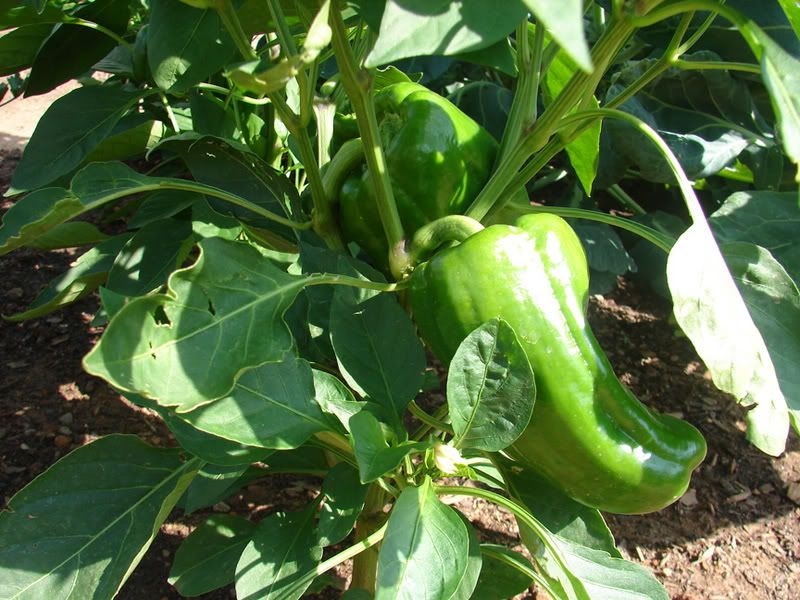
World Record Peppers?

To View A Slideshow of Growth Click Here