• RSS
  • Delicious
  • Digg
  • Facebook
  • Twitter
  • Linkedin
  • Green Idea 1 : ' Find your nearest Farmer's Market and go there this weekend with friends...
  • Green Idea 2 : ' Swap your old incandescent bulbs for CFLs when they burn out and start saving $$$
  • Green Idea 3 : ' Try using your bike this weekend instead of your car...
  • Green Idea 4 : ' This Spring why not plant a small kitchen garden of tomatoes and peppers on your balcony or patio?
  • Green Idea 5 : ' What are you waiting for? Make the change today!
  • SUSTAINABLE DESIGN

    The basic objectives of sustainability are to reduce consumption of non-renewable resources, minimize waste, and create healthy, productive environments.

  • URBAN GARDENING

    You can grow your own food whether you live on a rural farm or in a tiny urban apartment. Urban gardening is all about using space wisely to regain a closer connection with your food and beautify your home or neighborhood.

  • RENEWABLE ENERGY

    Explore energy resources, such as wind, solar, hydroelectric, biomass, geothermal, ocean thermal, and wave power, that replenish themselves within a short period.

  • LOCAL FARMERS MARKETS

    Locating the Farmers' Market nearest to you is now only a few clicks away. Localharvest.org is a useful and straight-forward site designed to faciliate your quest.

Showing posts with label Causality. Show all posts

Friday

Lost and Found Byron Bay: Bike Lock

Posted by vergelimbo On 1:08 AM


Last week I found a bicycle lock while I was cycling into town. It was the cable type with a 5-digit combination, and quite expensive. I live a few kilometers outside the center of Byron Bay, and there is a decent bike path most of the way into town that is well travelled by hundreds of commuting cyclists every day. On this particular day I was racing into town during a brief pause between rain showers to get some groceries. This winter has been the "wettest" on recent record, and as my bike is my primary means of transportation, these rare breaks between showers have to be exploited. It was still drizzling a fine mist as I pedaled my way along the wet bike path towards town.

By no means could it have been considered "a good day for cycling". Nonetheless, there were more cyclists on the road that day than on the sunniest of summer days. Apparently, the cycling community of Byron writ-large was capitalizing on the temporary reprieve from the rain to "get into town". Mid-way along my journey I spied a bike lock on the edge of the path where the concrete meets the green verge of lawn. "Bummer", I thought as I instinctively applied my brakes. The front and rear pads squealed in whining protest as their worn surfaces pinched the wet rims of my wheels. I completed the 180 degree turn and cycled back to pick up the lock. It was a quality lock, and I knew from personal experience that it would be sorely missed...

A few months before, I had lost a very similar cable-lock when it apparently fell out of an open pocket in my rucksack. Realizing it was missing, I quickly retraced my route, cycling around town looking for my lock in the roadside rain gutters and near the posts and poles where I had stopped. I never found it. I kept up my search for the next few days, scanning for high-visibility spots where perhaps some cycling Samaritan might have left it for me to easily find. As a last resort, I visited the "Lost and Found" at the Information Center, but to no avail. A few days later I conceded the loss and bought a new lock. That was back in late May - the beginning of wettest Winter in Australian history.

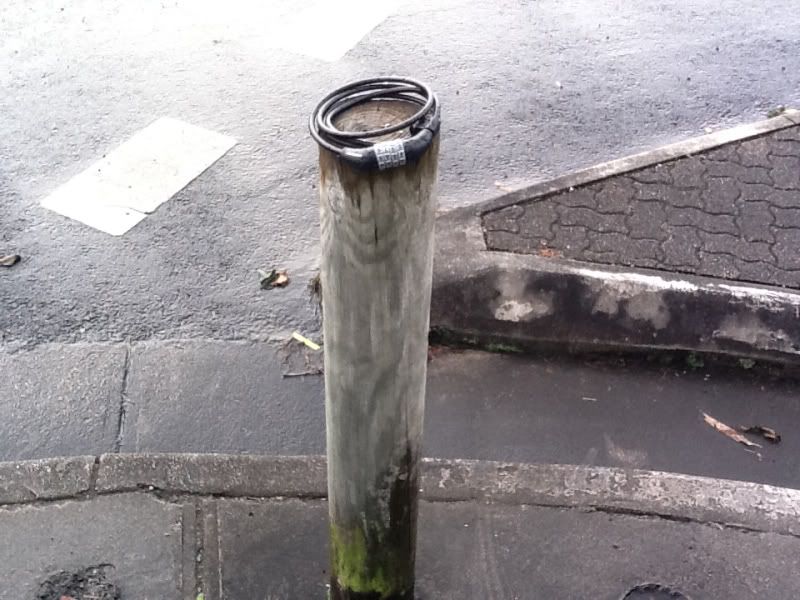
So, when a few months later, I spotted that cable-lock by the side of the path, I really did sympathize with it's owner. After I picked up the lost lock, I looked around for the most highly visible location where I thought I might place it to increase it's chance of being found by the owner. (See photo above) I reasoned that much in the same manner in which we have all seen car hubcaps intentionally propped up against the sidewalk - usually in a particularly sharp curve of the road, where they tend to spin off. A certain type of person had placed it specifically there: upright and clearly visible, in hopes that it might eventually be collected by it's owner should they drive again along their familiar route. Similarly, I imagined, every cyclist making their way into town would be confronted by the lost lock as they slowed to enter the large roundabout on Bangalow Road. They might mention having seen it to other cyclists if asked. It rested, neatly coiled, atop that pole for three consecutive rainy days. It was picked up by someone the fourth day. It was the first sunny day in weeks. I choose to believe that it is now reunited with it's owner... after all, it would be of no use to anyone without the combination.


Sunday

Words Are Important: Definition of "NORGANIC"

Posted by vergelimbo On 2:10 AM


Sometimes you simply need to invent a NEW WORD in order to accurately describe a NEW PHENOMENA!


Have you heard any neologisms (new words) lately that have stuck with you? Or maybe you have coined a few of your own to fill some gaps in our lexicon. New words, and their recorded definitions, are in continuous demand to describe the increasingly complex physical and intellectual world in which we live. Language is responsive to this need. The Urban Dictionary is an online, open-source dictionary that allows people to submit their neologisms for editorial review, and inclusion  if the new word and definition meet certain guidelines. Over the years I have added many new words that I felt were lacking from our 21st century vocabulary. [here are some] Generally, more arcane words slip from popular usage, while new words - either created or adopted from other languages - enter common usage and understanding. In simple terms, this is how a language evolves over time. The English language has proved the most adept of all languages at "absorbing" foreign and new words into it's expanding dictionaries. This open-source dynamic has made English the lingua franca of commerce throughout the world.

What do you think of this article? Why not leave a comment below, and perhaps include examples of your own word creations and definitions. If you like the word "NORGANIC", and recognize it's significance in our mega-corporatized world of deceptive marketing, then use it with confidence. Explain the definition if anyone asks. I have found that people tend to intuitively understand the word and it's value quite easily.

If you like the word "NORGANIC" and it's definition click the THUMBS UP icon here: NORGANIC on "The Urban Dictionary".


Saturday

Gluten-Free is NOT a Flavour...

Posted by vergelimbo On 2:07 AM

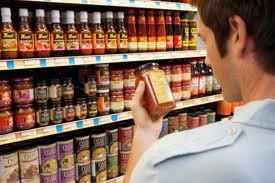
In recent years there has been a staggering proliferation of confusing new food labels appearing on items found on your supermarket shelves. Interpreting these new "dietary hieroglyphs" can be a challenge to even the most informed consumer. While some labels are issued by research-based Certifying Authorities and offer thorough explanations of what they signify, others are underpinned by less empirical foundations, if any at all. But which are which? The food-label design market is undergoing an unprecedented boom. (insert graphic here) It would seem that now would be an ideal time to be a graphic designer! The examples below, of competing symbols for the "Gluten-Free" label, are only a small sample of the myriad of symbols currently vying for pre-eminence in the new and increasingly lucrative "Gluten-Free" food market.

Apparent Difficulty Reaching Consensus On Label For "Gluten-Free" Foods


MEANWHILE, overheard at a grocery store near you:

"Do  you guys want to get some ice-cream?" I  asked  hopefully, as Kim, Skye and I strolled by the frozen section at our local grocery store.  
"Yeah!", both girls exclaimed in unison.
"What flavours have they got?" Kim asked, as we stopped to look.  
I began to read the labels, "Chocolate, vanilla, coffee, strawberr..."
"I want Gluten-free!", Skye interrupted,  striking  that self-righteous pose she'd  been practicing lately. 
"Gluten-free is NOT a flavour, Skye", I managed. Kim laughed.
"Yeah, it is!", Skye exclaimed. My eyes began to roll upwards.
"No, she's right", Kim said, "it IS a flavour- it tastes like crap".  

________________________________________________________________________________

The scenario presented above is intended purely for satirical purposes, (foodies, don't get your knickers in a knot) and the names of the consumers have been changed. Nonetheless, the truth it describes typifies a post-modern and unfortunate new trend in food consumerism and group decision-making. Eating is becoming more highly individualized and regimented, as opposed to the social and flexible activity it once was. The "Breaking of bread"(Gluten-free or otherwise) with others, sharing food and the conversation that follows is an integral part of building and living in community with others. Sharing food (nutrition for the body) and ideas (nutrition for the mind) is an essential cohesive dynamic. The more recent trend of "personalized" eating, take-away meals for one and the apparent rise in food sensitivities may foreshadow other emerging social  food/eating complications:

Have you experienced a similar "food control" issue lately? Have you perhaps avoided hosting dinner parties for fear of not being able to satisfy the ethical, political, economic, religious, and dietary needs of your friends? Have you stood for countless hours while shopping, carefully reading labels and trying to recall the precise difference between the "USDA Organic" and "Certified Organic" labels? If so...


Share Your Thoughts Below!
 For more information on the need to standardize food labels and the dangers caused by misleading or misunderstood certifications see: FOOD LABEL DANGERS


Monday

"January Joiners" Infest Gyms Worldwide!

Posted by vergelimbo On 1:59 AM

I suspect that the most common New Year's resolution made is to "Join the local gym". My suspicion is borne out by the swelling number of unfamiliar and often confused faces I see meandering around my local Y trying to figure out how certain machines work. These "January-joiners" swell the membership numbers of gyms, and cause congestion for the first few weeks of the New Year. Experience has taught me that by mid-February, attrition will claim the majority of these well intentioned, and the congestion and waiting for an open elliptical machine with a TV Monitor will become a fading memory...


What is wrong with this picture?

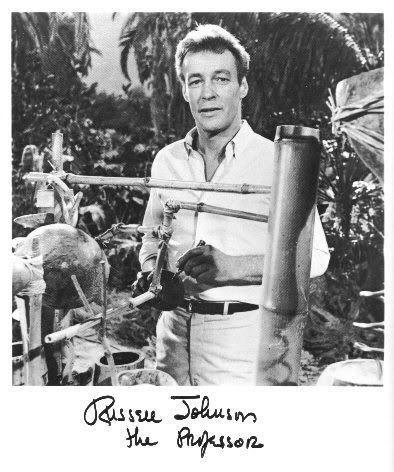
If you are like me, you can recall the Professor on Gilligan's Island pedalling his bamboo and coconut bicycle to generate the energy needed to operate his Rube Goldberg-esque laboratory. Perhaps inspired by the Professor's ingenuity, Windstream llc is currently marketing a Bicycle Generator Kit that can easily adapt to fit any standard bicycle and generate and store electricity.

How cool is this? When used with the portable power pack, a determined cyclist is able to generate sufficient energy to power a laptop or television. An entire bank of such bikes could reduce the energy costs of any gym. It has always seemed a "waste of energy" to me that the elliptical machines at my gym actually need to be plugged in in order to power the LED screen.
How it works:
The Bike Power Generator consists of a powder coated steel trainer frame holding a permanent magnet DC generator. Your bicycle (typical adult 27 inch wheel diameter) is mounted securely to this frame and the rear tire is positioned to turn the friction drum that has been custom fit over the generator shaft. The amount of electrical power that can be generated by the Bike Power Generator is determined by the energy available from pedaling the bicycle. (more info)

Leave me a comment by clicking on the link below!

Thursday

Byron Bay's Utility Box Art: Russell and Callie

Posted by vergelimbo On 1:53 AM


Wandering around the beachside town of Byron Bay, New South Wales, you won't spot any of those eyesores of modern electrical convenience known as "utility boxes". Instead, those banal and industrial-looking urban warts have been given a makeover by two Lismore-based artists, Russell and Callie.  Their artistic boxes blend thematically into their environment, highlighting nearby subjects of interest and emphasizing the surfside imagery of Byron Bay. Art and Utility in Byron Bay!

HERE ARE JUST A FEW THAT I HAVE FOUND SO FAR:


So what is the difference between Graffiti and Street Art? When pressed, most people would seem comfortable with the distinction being made along the lines of artistic skill or technique. But such criteria can be quite subjective, and easily lead to a blurring of graffiti and street art in many cases. In Australia, the legal distinction between the two artforms is made simply on the basis of permission. Graffiti is defined under the law as "the marking of another person's property without permission". Graffiti is illegal throughout Australia. Street Art, such as the examples in the slideshow above, meet the crieria of "artistic work done with the permission of the person who owns the wall (or object) that the work is being done on, and the permission of the local council". As an example of this criteria, it can be said that the street art rendering of the Volkswagen van (top image) has thus been tagged illegally with graffiti! Ironically, the graffiti (in red) is sprayed directly above "Keep Byron Clean". Don't you just love irony?

What do you think? Have you seen anything like this in your neighbourhood?

Wednesday

The Whole Foods boycott

Posted by vergelimbo On 8:34 PM

If one needed another reason to continue boycotting Whole Foods, their CEO, John Mackey has given me one. See the article below for the groundswell...32000 facebook members have decided to stop spending their hard earned money there and I'm pleased to learn that facebook has a use beyond alerting me to birthdays.
I say: F**k Whole Paycheck and their $8 arugula that was monocultured on industrial farms 1500 miles away and shipped in plastic bags. Buy Local Food...or grow your own. It is fresher, cheaper, will stimulate the local economy and build community. Find your nearest farmers' market here: http://localharvest.org


Whole Foods boycott/buycott showdown

Dante Chinni
The Christian Science Monitor: 09.02.2009

There are many commandments in retail, but above them all is one rule: Know thy customer.

If you run Wal-Mart, don’t stock Louis Vuitton – or at least not real Louis Vuitton. If you work at Toys ‘R’ Us, where some shoppers are kids, watch your language. And if you are the CEO of relentlessly progressive Whole Foods, the upscale grocery store that specializes in organic items, don’t come out against the Obama administration’s healthcare proposals.

On Aug. 11, John Mackey, the chairman and CEO of Whole Foods, did just that. In a Wall Street Journal op-ed headlined “The Whole Foods Alternative to ObamaCare,” Mr. Mackey said a number of things that might not sit well with his clientele – perhaps most memorably, “the last thing our country needs is a massive new health-care entitlement that will create hundreds of billions of dollars of new unfunded deficits and move us much closer to a government takeover of our health-care system.”

Mackey later said he was speaking for himself and not for his chain of stores, but the damage had been done. Whole Foods foodies went to the barricades, kind of. Customers pledged to stop shopping at the stores. They urged the TV show “Top Chef” to drop Whole Foods as a sponsor. And in typical 2009 fashion, they expressed their outrage on Facebook, creating a “Boycott Whole Foods” page, which has more than 32,000 members.

Read the full article here

Friday

The Evolution of Food: From Mother Nature to the Mad Scientist... and back again?

Posted by vergelimbo On 1:52 PM

The history of humankind's relationship with food, both cultivation and consumption, is exceedingly complex and an interesting indicator of societal trends that go well beyond the kitchen table. One phenomenon that has caught our attention recently is the increased promotion of "natural", unadulterated products. This trend is a relatively new, and applauded, break from the recent past.

In the 1950s, mass-produced food came to dominate the American market and resulted in a marked reduction in the nutritional quality of the food that the typical person ate. Food was refined and enhanced and frozen, concepts that imply through the suggestive language of marketing promises of progress and scientific advancement.


Food that had once been local, fresh and seasonal was now being centralised, treated and produced on ever-increasing scales. Nutritional content was lost in the name of convenience, variety and cost-efficiency, impacting taste and dietary norms and expectations.

The next stage in the contemporary development of food can be seen (cynically?) as a superficial profit-driven reaction to consumer demand rather than a real desire for healthier products. The exact same foods that had just had its nutritional content stripped from it by the refining, freezing and other methods associated with mass production was now being enriched and fortified. A further step was added to the ever-lengthening conveyer-belt between the food source and the consumer, which involved artificially reintroducing vitamins and minerals, although in significantly diluted and altered amounts. These modified products are then hawked to the unsuspecting buyer based on the premise of their "superior" nutritional value. The food industry has developed sophisticated marketing strategies with the goal to capitalise on the perception of “progress” and its associated benefits. The American public has been educated to think that “new is improved”, a premise that it also applies to food. How could enriched and fortified wheat bread not be healthier than a loaf untouched by the miracles of science?

Like with almost all relationships, things tend not to remain static and the modern consumer has now entered what could be considered a more enlightened era. Of course, it will take time for this new approach to filter down to the average Joe or Jill, but there is certainly movement in that direction. After decades of tampering and "improving" our food, from the staples through to the luxuries, there is a move back to nature and the natural.

Perhaps it was the nation-wide food scares that brought to light the dangers of mono-farming and how one source can contaminate the food chain of the whole continent (e.g., salmonella from tomatoes, E. coli from spinach, even lethal dog food)? Or maybe it is the speculation that the hormones and anti-biotics in industrially-produced animal and dairy products are affecting the health and development of our children? Whatever the reason, there is a palpable and growing movement towards natural, locally-grown organic food that is becoming increasingly main-stream.

What does this tell us about our relationship with food and, perhaps, with the food industry and its regulators? First, there is an increasingly aware and educated consumer, although one that remains to a large degree at the mercy of the marketing machine (and lobbyists) of the food industry. This problem is compounded by the inconsistency and laxity of the bodies that should be enforcing clarity and nutritional awareness (e.g., FDA, USDA, EPA). Second, for many consumers there is more willingness to sacrifice efficiency, and even cost, in the name of better health and nutrition, although this trend is certainly at its earliest stages (education, education, education).

Finally, as the local and organic movements move out of the ashrams and communes and expand into suburbia and, eventually, to urban centres, there is more acceptance and demand for good, healthy, untreated local food. Not to be forgotten, our collective palates will also thank us for the change back to food as nature intended.


Recession Gardening and The Micro CSA Project

Posted by vergelimbo On 5:36 PM

There's money in them there vegetables!

Spring is right around the corner, and many a gardener's green thumb is twitching. I spent a sunny Saturday turning over one of my larger raised beds and uprooting last seasons spindley leafless tomato and pepper plants. I am always careful to shake the heavy-laden roots and capture as much of the soil as possible. The old saw: Waste not, want not fits gardening like glove.

Urban Garden Project Year 3: Oct 2008
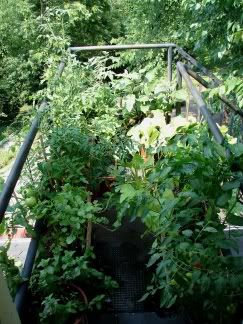
When I started The Urban Garden Project 4 years ago, it was only in part for the financial benefit of growing my own favorite veggies. For the most part it was an expression of potential- to transform an unused piece of urban land into something useful and beautiful. It was also sort of a habit...gardening was just something that I did. My first summer job was building a new community garden near where I grew up. This process lasted over 4 summers from the age of 13-17. When it was completed it occupied 2 acres and 116 raised garden beds. Along the way I learned how to build a fence, lay patio stone walkways, build a deck and finally graduated to building a gazebo for the gardeners to enjoy. I have started my own garden in every place I have lived ever since then. Sometimes I was restricted to a mere fire-escape garden, but it is surprising how much a container garden can yield. Tomatoes and Peppers thrive in containers.

John's Garden is a recession-proof model of sustainabilty.

Since we are now in an economic recession (proving: you reap what you sow) more people have begun planting their own "kitchen gardens" and cutting down on their trips to Whole Paycheck. I was speaking to an old friend the other day who is anxious to start such a homestead garden. We discussed starting a network of small home gardeners that could share/swap/trade their individual yields. I already do this to a small degree with my gardener friends but look forward to the possibility of helping to expand this idea with some other interested parties. (Find more ideas on garden swaps and Micro-CSA see articles here and here)

If you are interested in the idea of starting a local network of organic gardeners leave me a comment below. I will follow up with an email in a few weeks time as the season is upon us. We can meet to compare notes and swap seeds, plans, ideas etc.


Thursday

"January-Joiners" Infest Gyms Nationwide!

Posted by vergelimbo On 3:59 PM

I suspect that the most common New Year's resolution made is to "Join the local gym". My suspicion is borne out by the swelling number of unfamiliar and often confused faces I see meandering around my local Y trying to figure out how certain machines work. These "January-joiners" swell the membership numbers of gyms, and cause congestion for the first few weeks of the New Year. Experience has taught me that by mid-February, attrition will claim the majority of these well intentioned, and the congestion and waiting for an open elliptical machine with a TV Monitor will become a fading memory...


What is wrong with the picture above?
If you are like me, you can recall the Professor on Gilligan's Island pedalling his bamboo and coconut bicycle to generate the energy needed to operate his Rube Goldberg-esque laboratory. Perhaps inspired by the Professor's ingenuity, Windstream llc is currently marketing a Bicycle Generator Kit that can easily adapt to fit any standard bicycle and generate and store electricity.

How cool is this? When used with the portable power pack, a determined cyclist is able to generate sufficient energy to power a laptop or television. An entire bank of such bikes could reduce the energy costs of any gym. It has always seemed a "waste of energy" to me that the elliptical machines at my gym actually need to be plugged in in order to power the LED screen.
How it works:
The Bike Power Generator consists of a powder coated steel trainer frame holding a permanent magnet DC generator. Your bicycle (typical adult 27 inch wheel diameter) is mounted securely to this frame and the rear tire is positioned to turn the friction drum that has been custom fit over the generator shaft. The amount of electrical power that can be generated by the Bike Power Generator is determined by the energy available from pedaling the bicycle. (more info)

Leave me a comment by clicking on the link below!

Friday

Cycling Away The Winter Blues

Posted by vergelimbo On 5:34 PM

In the past month the Dow Jones has fallen 3000 points, we have "lost" 45 minutes of afternoon daylight, the leaves have turned and are now falling in tandem with the temperature. October has been a bleak month no matter how you choose to measure it.
The Winter Blues will soon be upon us...

In fact, I have already been feeling the encroaching symptoms of what I personally refer to as "mung"...a variation of seasonal affective disorder [SAD] that creeps gradually into my life as the leaves change and we are robbed of precious life-sustaining sunlight. As I have been "suffering" from these Winter Blues for years, I have collected some techniques for mounting a defense.

The primary weapon for combatting The Winter Blues is Exercise ...which for me comes primarily from cycling. It is amazing how invigorating a 15-20 mile bike ride can be. To many it may seem counterintuitive that an intense cardio/physical workout can actually "give" you energy, but it is a well documented fact.

By using the technology of mapmyride.com, I have mapped a series of safe, comfortable and interesting rides (such as the one pictured below) that anyone may access by clicking here.


Andiamo 18: A low traffic, high speed scenic ride of 1 hr