
• RSS
  • Delicious
  • Digg
  • Facebook
  • Twitter
  • Linkedin
  • Green Idea 1 : ' Find your nearest Farmer's Market and go there this weekend with friends...
  • Green Idea 2 : ' Swap your old incandescent bulbs for CFLs when they burn out and start saving $$$
  • Green Idea 3 : ' Try using your bike this weekend instead of your car...
  • Green Idea 4 : ' This Spring why not plant a small kitchen garden of tomatoes and peppers on your balcony or patio?
  • Green Idea 5 : ' What are you waiting for? Make the change today!
  • SUSTAINABLE DESIGN

    The basic objectives of sustainability are to reduce consumption of non-renewable resources, minimize waste, and create healthy, productive environments.

  • URBAN GARDENING

    You can grow your own food whether you live on a rural farm or in a tiny urban apartment. Urban gardening is all about using space wisely to regain a closer connection with your food and beautify your home or neighborhood.

  • RENEWABLE ENERGY

    Explore energy resources, such as wind, solar, hydroelectric, biomass, geothermal, ocean thermal, and wave power, that replenish themselves within a short period.

  • LOCAL FARMERS MARKETS

    Locating the Farmers' Market nearest to you is now only a few clicks away. Localharvest.org is a useful and straight-forward site designed to faciliate your quest.

Showing posts with label Food. Show all posts

Sunday

Words Are Important: Definition of "NORGANIC"

Posted by vergelimbo On 2:10 AM


Sometimes you simply need to invent a NEW WORD in order to accurately describe a NEW PHENOMENA!


Have you heard any neologisms (new words) lately that have stuck with you? Or maybe you have coined a few of your own to fill some gaps in our lexicon. New words, and their recorded definitions, are in continuous demand to describe the increasingly complex physical and intellectual world in which we live. Language is responsive to this need. The Urban Dictionary is an online, open-source dictionary that allows people to submit their neologisms for editorial review, and inclusion  if the new word and definition meet certain guidelines. Over the years I have added many new words that I felt were lacking from our 21st century vocabulary. [here are some] Generally, more arcane words slip from popular usage, while new words - either created or adopted from other languages - enter common usage and understanding. In simple terms, this is how a language evolves over time. The English language has proved the most adept of all languages at "absorbing" foreign and new words into it's expanding dictionaries. This open-source dynamic has made English the lingua franca of commerce throughout the world.

What do you think of this article? Why not leave a comment below, and perhaps include examples of your own word creations and definitions. If you like the word "NORGANIC", and recognize it's significance in our mega-corporatized world of deceptive marketing, then use it with confidence. Explain the definition if anyone asks. I have found that people tend to intuitively understand the word and it's value quite easily.

If you like the word "NORGANIC" and it's definition click the THUMBS UP icon here: NORGANIC on "The Urban Dictionary".

Saturday

Gluten-Free is NOT a Flavour...

Posted by vergelimbo On 2:07 AM

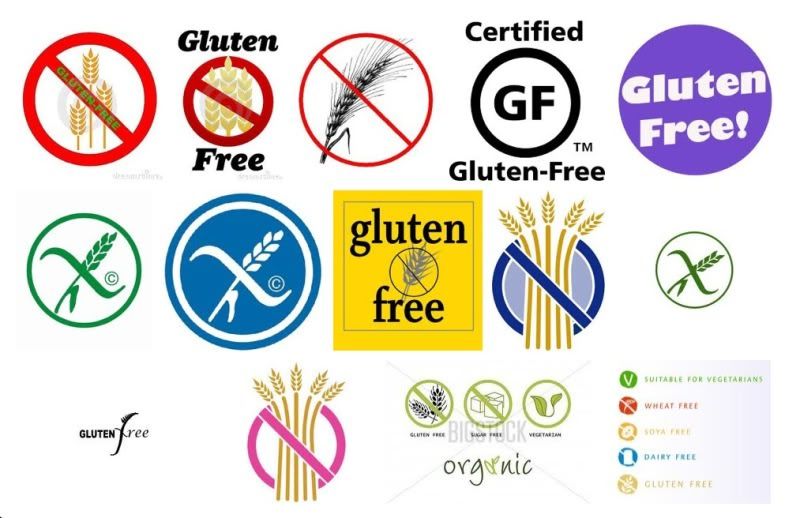
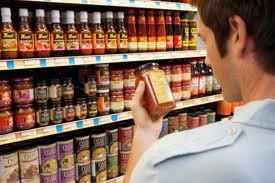
In recent years there has been a staggering proliferation of confusing new food labels appearing on items found on your supermarket shelves. Interpreting these new "dietary hieroglyphs" can be a challenge to even the most informed consumer. While some labels are issued by research-based Certifying Authorities and offer thorough explanations of what they signify, others are underpinned by less empirical foundations, if any at all. But which are which? The food-label design market is undergoing an unprecedented boom. (insert graphic here) It would seem that now would be an ideal time to be a graphic designer! The examples below, of competing symbols for the "Gluten-Free" label, are only a small sample of the myriad of symbols currently vying for pre-eminence in the new and increasingly lucrative "Gluten-Free" food market.

Apparent Difficulty Reaching Consensus On Label For "Gluten-Free" Foods


MEANWHILE, overheard at a grocery store near you:

"Do  you guys want to get some ice-cream?" I  asked  hopefully, as Kim, Skye and I strolled by the frozen section at our local grocery store.  
"Yeah!", both girls exclaimed in unison.
"What flavours have they got?" Kim asked, as we stopped to look.  
I began to read the labels, "Chocolate, vanilla, coffee, strawberr..."
"I want Gluten-free!", Skye interrupted,  striking  that self-righteous pose she'd  been practicing lately. 
"Gluten-free is NOT a flavour, Skye", I managed. Kim laughed.
"Yeah, it is!", Skye exclaimed. My eyes began to roll upwards.
"No, she's right", Kim said, "it IS a flavour- it tastes like crap".  

________________________________________________________________________________

The scenario presented above is intended purely for satirical purposes, (foodies, don't get your knickers in a knot) and the names of the consumers have been changed. Nonetheless, the truth it describes typifies a post-modern and unfortunate new trend in food consumerism and group decision-making. Eating is becoming more highly individualized and regimented, as opposed to the social and flexible activity it once was. The "Breaking of bread"(Gluten-free or otherwise) with others, sharing food and the conversation that follows is an integral part of building and living in community with others. Sharing food (nutrition for the body) and ideas (nutrition for the mind) is an essential cohesive dynamic. The more recent trend of "personalized" eating, take-away meals for one and the apparent rise in food sensitivities may foreshadow other emerging social  food/eating complications:

Have you experienced a similar "food control" issue lately? Have you perhaps avoided hosting dinner parties for fear of not being able to satisfy the ethical, political, economic, religious, and dietary needs of your friends? Have you stood for countless hours while shopping, carefully reading labels and trying to recall the precise difference between the "USDA Organic" and "Certified Organic" labels? If so...


Share Your Thoughts Below!
 For more information on the need to standardize food labels and the dangers caused by misleading or misunderstood certifications see: FOOD LABEL DANGERS